
Understanding Fingerprint Cards for Background Checks
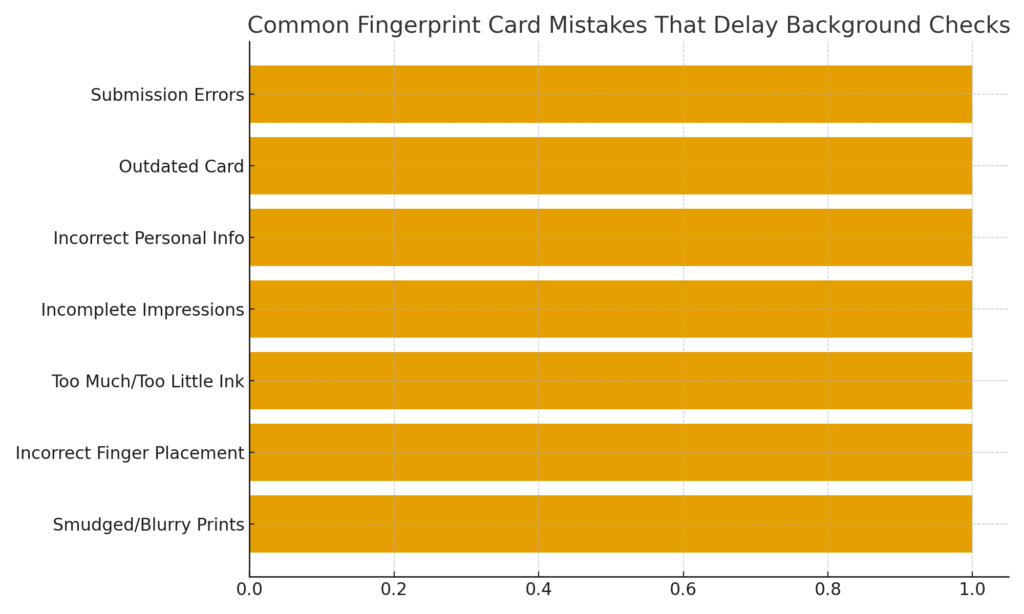
A fingerprint card is a crucial document used for background checks, job applications, and legal verification. Many agencies require ink fingerprinting as part of the screening process. However, even minor fingerprint card errors can lead to a background check delay, requiring resubmission and wasting valuable time. Knowing the most common mistakes can help you avoid setbacks and ensure your application gets processed smoothly.
Why You Are on Cards in the First Place
Almost nobody chooses an ink card. You are holding one because of where your fingerprints have to go.
California Live Scan submits electronically to the California Department of Justice, and on to the FBI where your applicant type requires it. It does not reach Nevada, Arizona, Texas, Illinois, New York or any other state’s agency — there is no wire running between one state’s justice department and another’s. So if the licence you are applying for is issued outside California, or the agency is federal or foreign, Live Scan cannot carry your prints there. Cards are the only instrument that travels.
That is also why the mistakes below are possible at all. A Live Scan capture either works or it does not, and you find out in the room. A card is rolled by hand, judged later by somebody you will never speak to, and can be accepted, rejected, or quietly wrong for weeks before anyone tells you.
1. Smudged or Blurry Fingerprints
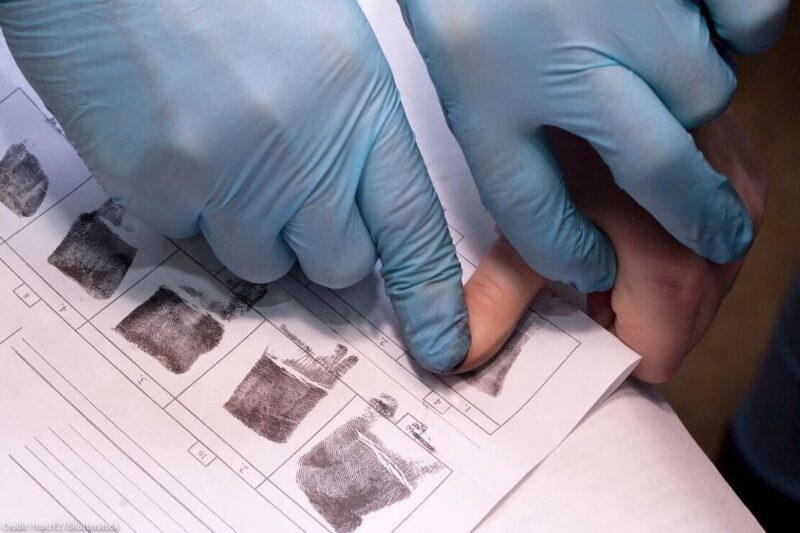
One of the most common fingerprint card errors is smudging. If fingerprints are not clearly rolled from one side to the other, they can become blurry and unrecognizable. Excessive pressure, sweaty hands, or improper rolling techniques often cause smudging. Law enforcement agencies and employers require crisp, high-quality fingerprints to verify identity accurately. Smudged prints increase the chances of rejection and delay the entire background check process.
Need FD-258 fingerprint cards rolled in Los Angeles? We supply the cards, roll the prints, and travel anywhere in LA. Same-day appointments available.
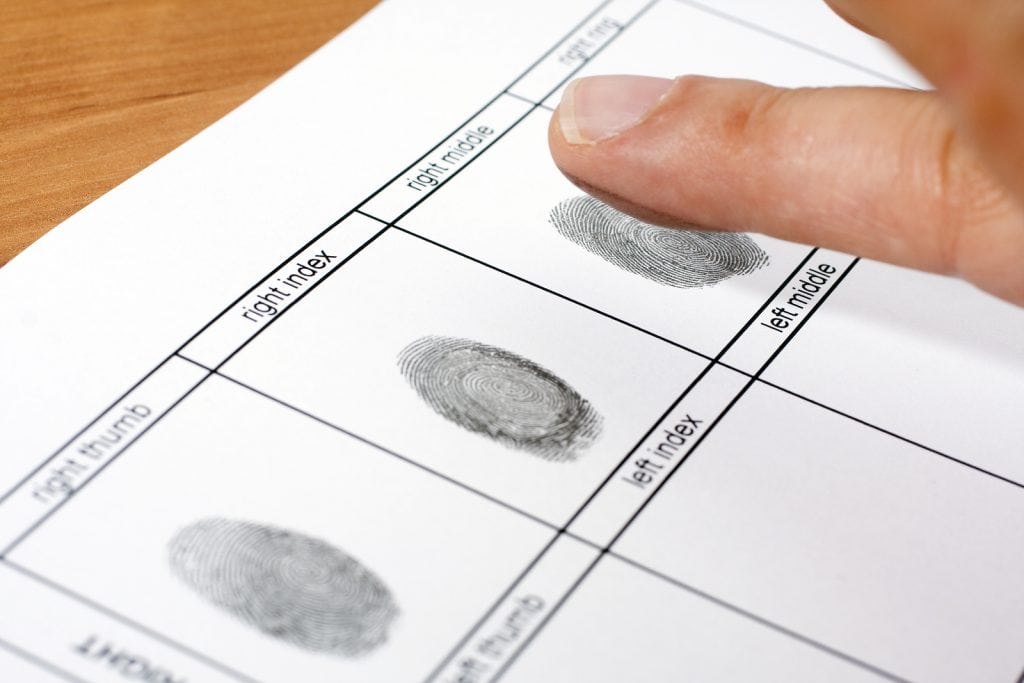
2. Incorrect Finger Placement
Each fingerprint must be positioned correctly on the card. Placing fingers too high, too low, or at an incorrect angle can make prints unreadable. Ink fingerprinting requires precise rolling of each finger to capture distinct ridge patterns. Misalignment results in incomplete prints that do not match the required standards, leading to unnecessary background check delays and additional fingerprinting sessions.
3. Using Too Much or Too Little Ink
Proper ink application is critical for capturing fingerprint details. If too much ink is used, fingerprints become overly dark, obscuring the ridge patterns. On the other hand, too little ink can result in faint prints that fail to register in background check databases. The right balance ensures that the fingerprints appear clear, legible, and suitable for processing without rejection.
4. Incomplete Fingerprint Impressions
Every fingerprint must be fully rolled to capture all ridge patterns. Partial impressions occur when fingers are not rolled from one edge to the other. Some applicants lift their fingers too soon, leaving incomplete prints. Agencies require full impressions for accurate identification, and incomplete fingerprints lead to card rejection, further delaying the background check process.
5. Illegible or Incorrect Personal Information
Beyond fingerprint quality, all personal details on the fingerprint card must be legible and accurate. Errors in names, birth dates, or Social Security numbers can result in mismatched records. Handwritten entries should be clear, without smudging or overwriting. Any discrepancy between submitted documents and the fingerprint card can cause confusion, requiring correction and resubmission.
6. Submitting an Outdated Fingerprint Card
Not all fingerprint cards are the same. Some agencies require specific versions, such as the FD-258 card for FBI background checks. Using an outdated or unofficial fingerprint card can lead to immediate rejection. Applicants should verify requirements with the requesting agency before submitting their fingerprint cards to avoid unnecessary background check delays.
7. Failure to Follow Submission Guidelines
Each agency has different submission requirements for fingerprint cards. Some require sealed envelopes, while others mandate electronic submission. Mailing the card incorrectly, failing to include necessary fees, or submitting to the wrong address can result in processing delays. Carefully following the submission instructions ensures that the fingerprint card reaches the right department without complications.
If Your Prints Get Rejected, There Is a Ceiling
This is the part worth knowing before you worry about it: you will never be asked for a third set.
If the California DOJ rejects prints twice on quality, it does not request another card. It processes the record using the applicant’s name and the identifying information already submitted — a name-based search, sometimes called a name-index check. It happens inside the DOJ process, not at the technician’s discretion.
So a resubmission is not the start of an open-ended problem. Poor ridge detail — common with older applicants, and with hands worn by years of work — means you may need the second submission. It does not mean you will be sent back a third time.
It does have to be a true resubmission tied to the original transaction, so keep the original form, the ATI number and the rejection notice. Those are what connect the second set to the first.
Frequently Asked Questions
How can I prevent fingerprint card errors?
Work with experienced professionals for ink fingerprinting, ensure clean hands, use the correct fingerprint card, and follow rolling techniques carefully.
What happens if my fingerprint card is rejected?
You will need to redo the fingerprinting process and submit a new card, which can delay your background check significantly.
Can I use Live Scan instead of ink fingerprinting?
It depends entirely on where your prints are going. California Live Scan submits only to the California Department of Justice and, through them, the FBI. If your agency is in another state, or is federal or foreign, Live Scan cannot reach it and cards are your only route. If your agency is Californian, Live Scan is usually the better choice, because it removes every mistake on this page. Tell us the agency and we will tell you which one you need.
How long does it take to process a fingerprint card for a background check?
Processing times vary but typically range from a few days to several weeks, depending on the agency and submission method.
Where can I get professional fingerprinting services?
For high-quality fingerprinting services and background check assistance, visit Anshin Notary to ensure accurate and fast processing.
Our services include Live Scan Fingerprinting, FBI Background Checks, Fingerprint Cards, Notary Public, Apostille, Business Services, and Expungement.
Also Read: 5 Reasons to Get an FBI Background Check for Employment & Travel