
When is translation required before vs. after an apostille?
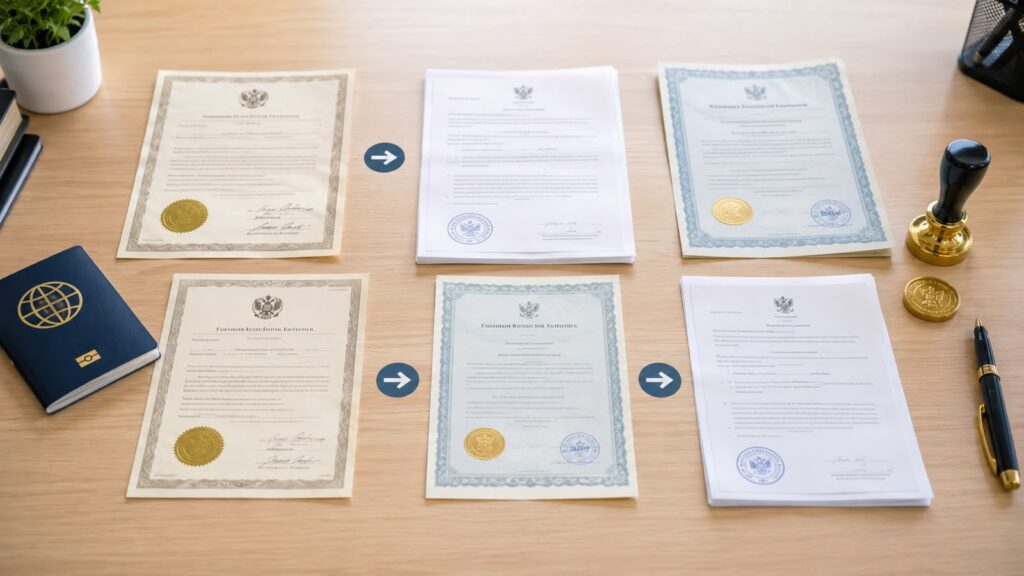
Most of the time, translation comes after the apostille, because the apostille is attached to the final official document and many receiving offices want the translation to match the exact apostilled version. If you translate too early and later replace the document with a newer certified copy, correct a name detail, or reissue a record, you often end up paying for translation twice.
Translation can come before the apostille in a smaller set of situations, usually when the receiving institution requires a translated version for review before they tell you what exact original document version is acceptable, or when the document is being prepared as a notarized statement where the translated text is part of what you are notarizing. In those cases, the translation becomes part of the document package before authentication.
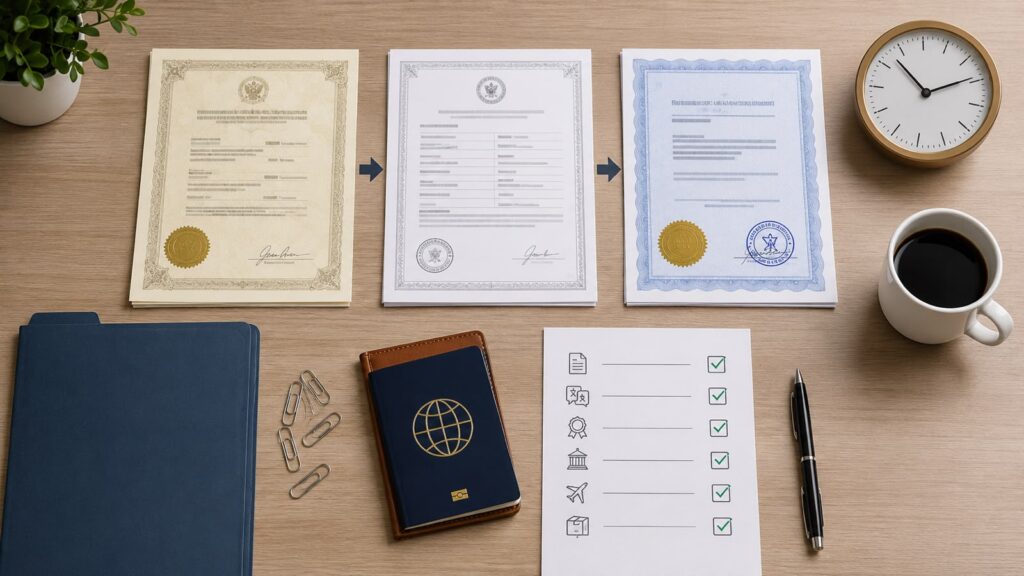
The safest way to avoid rework is to confirm the receiving office’s rule first, then follow a consistent sequence. In most cases, the sequence that works is: obtain the correct certified or official record, apostille it through the correct authority, then translate the final apostilled packet according to the receiving office’s certified translation requirements.
Why translation timing causes so many delays
Translation mistakes are not usually about language quality. They are about timing and document version control.
Apostilles attach to specific documents. If you swap the document after the apostille is issued, the apostille does not transfer. Translation behaves the same way. If you translate a version you later replace, that translation may no longer match what you are submitting.
This is why “translate first to save time” often backfires.
Another delay point is that different receiving offices use the word “certified” differently. Some mean a translator’s certification statement. Others mean a sworn translation format. Others mean a translation that includes every stamp and attachment, including the apostille itself.
Your goal is not to guess what they mean. Your goal is to confirm what they accept, then build a clean apostille packet and translation set that matches that instruction.
The simple rule most people can follow
If you want the most reliable default approach, use this:
Apostille first, then translate the final version.
That single rule usually satisfies certified translation requirements because the translation can include the final record plus the apostille attachment, exactly as submitted.
There are exceptions, and we cover them below, but this default prevents the most common rework cycle.
If you want help with translation tied to apostille packets, use the designated page once as your exact-match internal link: International Document Translation.
What “certified translation requirements” usually mean
People see “certified translation required” and assume there is one universal standard. There isn’t. The phrase is used differently depending on the country, institution, and purpose.
In practice, certified translation requirements usually fall into one of these patterns:
- A translator’s certification statement is required, confirming the translation is accurate and complete.
- A sworn translation format is required, where the translator is swearing to the translation under a defined local standard.
- A translation must include all stamps, seals, and attachments, including an apostille page.
- A translation must match the exact names, dates, and formatting of the original document with no interpretation.
- A receiving office requires the translation to be attached in a specific way, such as stapled, bound, or presented as a packet.
Your job is to identify which pattern applies to your receiving office. Once you do, the before vs after question becomes much easier to answer.
Where apostille translation timing matters most
Translation timing shows up most often in three document categories: vital records, academic documents, and business or corporate documents.
Vital records
Birth certificates, marriage certificates, divorce judgments, and similar records are commonly apostilled and then translated.
Vital records are also frequently reissued. People order an informational copy by accident, or the receiving office requires a newly issued certified copy, or they discover a name spelling mismatch and need a corrected record.
This is why translating before apostille is risky for vital records. If your record changes, you lose the translation spend.
For most vital record workflows, certified translation requirements are easiest to satisfy when you translate after the apostille, using the final certified copy plus the apostille attachment.
Academic documents
Academic documents create timing problems because the “right” apostille-ready version is not always the diploma you have in a drawer.
A school may issue an official transcript or registrar verification letter that differs from what you originally planned to use. If you translate too early, you may translate the wrong academic document.
For academic packets, the safest approach is to finalize which record will be apostilled first, apostille it, then translate the final packet. That gives you one consistent version to translate.
Business and corporate documents
Business documents can be clean or chaotic depending on preparation.
Certificates of Good Standing and certified filings are usually stable. Powers of attorney, board resolutions, and affidavits can change based on legal review.
When a business document is being drafted and reviewed, translation before apostille can make sense in certain cases because the translated text may be part of the final signed version. But once the document is signed and notarized, you still want the translation to match the final apostilled packet.
For business workflows, the key is to separate documents that are fixed public records from documents that are drafted and signed. Your translation timing can differ for each.
Quick reference table: before vs after translation
| Situation | Translate before apostille? | Translate after apostille? | Why this order usually works |
| Certified vital record that might be reissued | No | Yes | Prevents re-translation if the record version changes |
| Court order (complete certified copy) | Usually no | Yes | Translation matches the certified order plus apostille attachment |
| Academic records where final format is uncertain | No | Yes | Avoids translating the wrong record or the wrong version |
| Business record that is a fixed certified certificate | Usually no | Yes | Stable document, translation can include apostille attachment |
| Drafted power of attorney that is still being reviewed | Sometimes | Yes | Translation may be needed for review, but final translation should match final signed version |
| Receiving office explicitly requests translation first | Yes | Also, often yes | You may need an early translation for review, then a final translation of the apostilled packet |
Step-by-step: the safest way to decide translation timing
Step 1: Confirm what the receiving office expects
Ask them one clear question:
Requirements can differ depending on the document, destination country, and authority handling the apostille. The U.S. Department of State’s apostille requirements explain how federal documents should be prepared and advise obtaining a professional, notarized translation when the destination country requires translation from English. Always confirm whether the receiving office wants the translation prepared before authentication or wants the final apostilled packet translated afterward.
If they answer “packet,” you almost always translate after apostille.
If they answer “document only,” you still usually translate after apostille, but you translate only the document pages and keep the apostille page untranslated unless they request otherwise.
Step 2: Confirm which version of the document is acceptable
This matters more than translation quality.
If they want a newly issued certified copy, order that first.
If they want a long-form birth certificate, get that exact version first.
If they want a registrar verification letter, get that exact letter first.
Once you have the correct official version, you can avoid repeating steps.
Step 3: Apostille the final official version
For apostille-related workflows, keep your packet stable. Do not swap documents midstream.
If you need the apostille service page, use this apostille service details.
Step 4: Translate the final packet based on the confirmed requirement
Now translation becomes straightforward.
You translate what they asked for, in the format they asked for, based on the final document version they will actually receive.
This is the point where certified translation requirements are easiest to meet because the translation is tied to the final apostilled record set.
When translation before apostille can be the right move
Translation before apostille is not common, but it does happen in these situations.
One, the receiving institution requires a translated version first to review the content before they finalize their acceptance instructions.
Two, the document is being created as a statement or declaration where the translated text is part of what will be signed and notarized. In that case, the translation may be integrated into the document itself before authentication steps begin.
Three, a legal or compliance review requires translation during drafting, especially for corporate authority documents. Even then, you should still plan to produce a final translation that matches the apostilled version.
If you translate before apostille in any of these situations, treat that translation as a draft stage deliverable, not the final. The final translation should still align with the final apostilled packet.
Common mistakes that trigger rework
The most common error is translating an early version and then swapping the underlying record.
This happens when someone orders the wrong type of certified copy, or the receiving office wants the record issued within a recent timeframe, or a correction is needed.
Another common error is translating only the main document when the receiving office expects the translation to include attachments, stamps, and apostille pages.
A third error is mismatched names across documents. Translators generally mirror the source document. If your name is inconsistent across records, translation won’t fix it. It will highlight it. That mismatch can cause questions at the receiving office.
A fourth error is ignoring the receiving office’s format requirement. Some want a translator certification statement. Some want a sworn format. Some want the translation bound as a packet. If you guess, you create delays.
Conditional requirements: how the rules change by scenario
If the receiving country needs the apostille plus translation
Translate after apostille. This is the cleanest way to satisfy certified translation requirements because your translation matches the final apostilled packet.
If the receiving office accepts English documents but wants translation only for certain pages
Apostille first, then translate only the pages they require. This avoids translating unnecessary pages and avoids rework if the apostilled packet changes.
If your record might be reissued or corrected
Do not translate early. Reissue risk is the biggest translation time-waster.
If your packet includes a notarized statement
If the statement is still being drafted, you might translate before notarization for review purposes. Once signed and notarized, your final translation should match the final executed version, and if an apostille is needed, it should reflect the apostilled version.
If you need notarization, use this notary appointment options.
If your packet includes an FBI record
Sometimes the translation question appears because the receiving office wants a translated background check. That is separate from whether the record itself needs federal authentication.
If your workflow includes an FBI record, treat it as its own lane and confirm whether the receiving institution wants the translation to include attachments and certification language. For service context, you can reference FBI record service details.
A practical checklist that prevents 90% of translation delays
Confirm which document version is acceptable.
Confirm whether translation must include the apostille page and any stamps.
Confirm what “certified translation requirements” means for that receiving office.
Apostille the final official version first in most cases.
Translate the final packet according to the confirmed requirements.
Keep names, dates, and spellings consistent across your entire packet before translation.
If you do those six things, the before vs after question usually answers itself.

FAQs
When is translation required before an apostille?
Translation before apostille is usually only needed when the receiving office requires a translated version for review first, or when the translation is integrated into a document that will be signed and notarized.
When is translation required after an apostille?
Most of the time. Translating after apostille helps the translation match the final apostilled version, including the apostille attachment if required.
Do I need to translate the apostille page too?
It depends on the receiving office. Many want the translation to include all attachments and stamps, but some only want the underlying document translated. Confirm this before translating.
What is the safest default for certified translation requirements?
Apostille first, then translate the final packet, because it prevents rework if the document version changes.
Why do people end up paying for translation twice?
Because they translate an early version, then reorder or correct the underlying record, or they learn the receiving office wanted a different document version or format.
Do academic documents have special translation timing issues?
Yes. The apostille-ready academic record is often an official transcript or registrar verification letter, not the casual diploma copy. Finalize the apostille-ready record first, then translate.
Do business documents ever make translation-first a good idea?
Sometimes, during drafting and review. But the final translation should still match the final executed and apostilled version.