
How do I get a U.S. document apostilled for use in Italy?
To get an apostille for Italy, start by matching your document to the correct authority. State-issued documents (like birth certificates, marriage certificates, court orders, and many academic records) must be apostilled by the state that issued the record. Notarized documents (like a power of attorney or affidavit) must be apostilled by the state where the notarization happened.
Federal documents (most commonly an FBI background check) follow a federal apostille route through the U.S. Department of State under federal authority. California cannot apostille a federal document, even if you live in Los Angeles.
Next, confirm you have the correct document version before you submit anything. Italy-facing offices typically expect certified copies for vital records, and academic submissions often go smoother with an official transcript or registrar-issued letter instead of a casual diploma copy. Keep the sequence clean: confirm the Italy-side requirement, obtain the correct document version, complete the correct state or federal apostille step, then handle any Italian translation requirement the receiving office asks for.
Italy apostille requirements
If you are requesting an apostille for Italy, it helps to treat it as two lanes plus one preparation step.
The state lane covers documents issued by a U.S. state or notarized in a U.S. state. California documents stay in California. Out-of-state documents stay with their issuing state.
The federal lane covers documents issued by the U.S. federal government. Federal documents cannot be apostilled through a state system, even if you are preparing everything from Los Angeles.
The preparation step is making sure your document is apostille-eligible and is the version Italy will accept for your purpose. Many people assume “any official-looking copy” is fine, then find out Italy wants a certified record, a complete court order, or a specific type of school verification. That is where delays begin.
Italy participates in the Hague Apostille Convention, so apostille is commonly the standard authentication format for many U.S. public documents used in Italy. In many routine cases, that means you are not building a consulate legalization chain. Still, Italian offices and institutions can be strict about document type, completeness, and translation into Italian, depending on the receiving office and purpose.
This guide focuses on Italy apostille requirements from a Los Angeles and California perspective. It explains which U.S. documents commonly need an apostille for Italy, when state versus federal authority applies, and the most common mistakes so you can avoid rework.
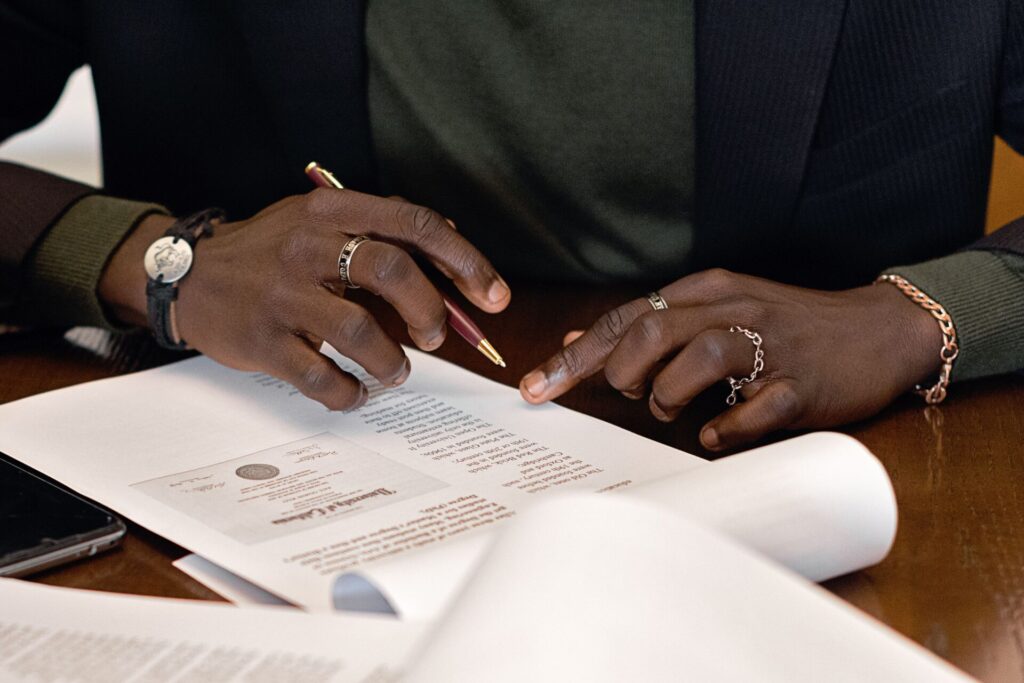
Where apostilled U.S. documents are commonly used in Italy
Most people pursue an apostille for Italy because an Italian institution needs formal proof that a U.S. document is authentic.
Common real-life situations include:
- Citizenship recognition or dual citizenship filings that require family and civil records
- Marriage registration, civil status updates, or family-related filings with a comune
- University enrollment or credential review for study in Italy
- Employment and professional steps that require authenticated educational or personal documents
- Business matters such as banking, corporate filings, contracts, or appointing a representative in Italy
- Property-related steps where an Italian party requests proof of identity, marital status, or authority
Within Italy, requirements can vary by receiving office. One comune may be strict about document recency. Another may be more flexible. One institution may accept an official transcript, while another asks for a diploma plus verification. One office may require Italian translation in a specific format.
Before you start any authentication work, confirm three points with your Italy-side checklist:
- They want the original, a certified copy, or a notarized statement
- They require the document to be recently issued for the purpose
- They require Italian translation and whether they have any format preference
Those three checks prevent the most expensive mistake in an apostille for Italy workflow: apostilling the wrong version of a document.
Which U.S. documents usually need an apostille for Italy
Most requests for an apostille for Italy fall into three buckets: vital records, academic documents, and business or corporate documents. Each bucket has its own most common delay point.
Vital records (personal and family documents)
Vital records are the most common reason people request an apostille for Italy. These documents are used for identity, family relationships, and civil status.
Common examples include:
- Birth certificates
- Marriage certificates
- Divorce decrees or final judgments
- Death certificates
- Court orders for legal name changes
For apostille birth certificate Italy, the number one issue is document version. Italy commonly expects an official certified copy when a certified record is required. Photocopies, screenshots, and informational copies are common reasons people get delayed.
If your vital record is issued in California and you are in Los Angeles, it typically follows the California lane. If it is issued in another state, it generally must be apostilled by that issuing state, even if you live in California now.
A practical Los Angeles tip is to identify out-of-state vital records early. One out-of-state birth certificate can change your timeline because you may need to order a certified copy from that state and then use that state’s apostille process.
Academic documents (education and licensing paperwork)
Academic documents come up in Italy for university enrollment, credential evaluation, regulated profession steps, and sometimes employment processes where formal education verification is required.
Common examples include:
- Official transcripts
- Letters of enrollment or graduation verification
- Registrar-issued certification letters
- Diplomas or degree certificates (sometimes requested)
Academic paperwork is a frequent delay point because the version a person has is often not apostille-eligible.
Many diplomas are ceremonial documents. Apostille offices usually need an official record or a properly prepared verification document with an eligible signature that can be authenticated. If you are dealing with apostille diploma Italy needs, it is often smoother to request an official transcript or a registrar-issued verification letter in an apostille-eligible format.
If your school is out of state, your academic record may belong in that issuing state’s lane, not California’s lane.
Business and corporate documents
Business documents are common when dealing with Italian partners, banking, compliance requirements, corporate filings, or appointing a representative in Italy.
Common examples include:
- Certificates of Good Standing
- Formation documents or certified state filings
- Board resolutions
- Powers of attorney
- Corporate authorization letters
- Certain affidavits or declarations used for business purposes
Business packets can involve mixed authority. A Certificate of Good Standing is typically state-issued. A power of attorney is typically signed and notarized in a state and then apostilled in that state. If a federal document is required for a specific purpose, that portion is handled separately through the federal lane.
If you need to execute a power of attorney or authorization letter in Los Angeles before apostille, schedule through a notary appointment so the notarization is complete before authentication.

California vs federal authority for Italy documents
This section matters because it is the most common reason people redo the process. For an apostille for Italy, the issuer controls the authority.
When a California apostille applies
A California apostille for Italy generally applies when the document is issued by a California public authority or notarized in California by a California notary.
Common examples include:
- California certified birth certificates or marriage certificates
- Eligible California court documents
- Notarized affidavits signed in California
- Notarized powers of attorney signed in California
- Notarized consent letters signed in California
For Los Angeles applicants, this lane is usually smooth if you start with the correct certified copy and the notarization is complete.
When federal authority is required
Federal authority applies when the document is issued by a U.S. federal agency or must be authenticated at the federal level.
A common example is an FBI background check, if an Italy-side requirement asks for a federally issued record. If your Italy process requires an FBI background check, that portion is handled through federal channels under federal authority.
Federal apostilles for Italy are issued by the U.S. Department of State under federal authority, which is separate from California’s state apostille process.
Out-of-state documents while living in Los Angeles
If your document is issued by another U.S. state, it generally must be apostilled by that issuing state. Your current location does not change that.
This is a common reason an apostille for Italy takes longer than people expect. Ordering a certified copy from another state and routing it through that state’s apostille lane adds time. The best fix is identifying out-of-state documents early, so your timeline is realistic from the start.
Quick reference table
| Document | Authority | First step | Common delay |
| California certified vital record | California state lane | Order the correct certified copy | Using an informational copy or photocopy |
| Out-of-state certified vital record | Issuing state lane | Order certified copy from issuing state | Sending it to California instead of the issuing state |
| Notarized affidavit signed in California | California state lane | Sign and notarize with complete notarial certificate | Incomplete certificate or name mismatch |
| Power of attorney notarized in California | California state lane | Execute POA correctly, then notarize | Missing signer details or notarization mistakes |
| Certificate of Good Standing | Issuing state lane | Request the official certificate | Using a website printout instead of the official certificate |
| Official transcript or registrar verification letter | Issuing state lane (or state where notarized) | Request official school-issued record | Trying to apostille a diploma copy without proper preparation |
| Federal document (if required) | Federal lane (U.S. Department of State) | Obtain the federal record in an official format | Trying to use a state apostille for a federal document |
Italy-specific timing and format issues that surprise people
People often expect Italy to accept documents the same way every time. In reality, it depends on the receiving office and the purpose.
For citizenship or civil status matters, the receiving office may compare multiple documents line-by-line. Name spelling, middle names, date formats, and parent information can matter. If your documents show different spellings, a missing middle name, or inconsistent place names, you may be asked to correct records or supply additional documentation.
For education-related matters, an Italian institution may be more interested in transcripts and official verification letters than a diploma copy. If you rush and apostille a diploma copy that cannot be authenticated easily, you can lose time.
For business matters, Italy may want proof of authority and proof of good standing. A web printout of company status is rarely a replacement for an official certificate. If you apostille a printout, it may be rejected.
These are not “apostille problems.” These are document quality problems. Apostille is the authentication step. It cannot fix a missing page, a wrong document type, or a mismatch across records.
If you plan around those realities, your apostille for Italy packet moves faster.
Step by step: how to build an Italy document packet from Los Angeles
Step 1: Confirm what the receiving office in Italy wants
Start with the receiving institution in Italy and confirm what they want in plain terms.
- They want the original, a certified copy, or a notarized statement
- They have a recently issued expectation
- They require Italian translation and any format preference
- They require you to submit complete multi-page documents with no missing pages
This step prevents apostilling the wrong version, which is expensive because apostilles attach to the document itself.
Step 2: Map each document to the correct lane
Make three piles:
- California documents
- Out-of-state documents
- Federal documents
This is the simplest way to stop routing mistakes. It also gives you a realistic timeline, because out-of-state and federal items often take longer than a California-only packet.
Step 3: Obtain the correct official versions
Vital records should be certified copies.
Academic records are usually official transcripts or registrar-issued verification letters.
Business documents should be official certificates and certified filings, plus properly executed authority documents.
Notarized documents should be executed as originals, with complete notarization.
If you are missing a certified record, reorder it before apostille. Do not assume notarizing a photocopy will satisfy an Italian office unless they explicitly say they accept that format.
Step 4: Execute notarized documents carefully
Many Italy packets include powers of attorney, affidavits, consent letters, or authorization statements.
Execution quality matters because a notarization mistake can cause apostille rejection, and even an apostilled document can still be questioned by the receiving institution if the content and execution look inconsistent.
Common execution issues include signer name mismatch with ID, incomplete notarial certificate, missing pages, and signatures placed incorrectly.
If you need translation support for an apostilled packet, you can review options here: International Document Translation
Step 5: Complete the apostille step through the correct authority
California documents stay in the California lane.
Out-of-state documents go through the issuing state lane.
Federal documents go through the U.S. Department of State lane under federal authority.
Mixing lanes is the main reason an apostille for Italy request gets delayed.
Step 6: Translation timing for Italian filings
Many Italian offices require Italian translations. Requirements vary. Some receiving institutions accept certified translations prepared in the U.S. Others expect a specific format.
Do not guess. Confirm translation rules with the receiving office.
A safe planning rule is apostille first, translation second, unless the receiving office instructs you differently. Translating too early can lead to repeating translation if you later reorder a certified copy.
Step 7: Keep your packet organized
Keep copies of each certified document before apostille, copies of each apostille, and any related receipts or shipping records.
Italy submissions can involve follow-up requests, especially in civil registry or citizenship-related processes. Having a clean record set makes responses easy.
Conditional requirements: how the process changes
If your packet includes only California-issued documents
This is often the fastest path from Los Angeles. Most delays come from ordering an informational copy instead of a certified copy, or incomplete notarization on documents that need notarization.
If your packet includes out-of-state documents
Your timeline changes immediately. You must order certified copies from the issuing state and use that state’s apostille lane. Plan early so one out-of-state record does not delay everything else.
If your packet includes a federal document
Treat federal items as their own lane. Federal apostilles for Italy are issued by the U.S. Department of State under federal authority, separate from California.
This is a common delay point in an apostille for Italy process because people assume state apostilles cover everything. They do not.
If your records have inconsistent names or dates
Italian offices can compare details across documents, especially in civil status and citizenship-related filings. If your name appears differently across records, or you changed your name, expect questions.
Correcting issues before apostille is usually easier than explaining discrepancies after apostille.
If you need multiple originals for different Italian offices
Some receiving offices keep originals. If you need to submit the same document to multiple offices in Italy, you may need multiple certified copies and multiple apostilles.
Confirm this early so you do not discover it after you already completed one set.

Common mistakes and delays
Most delays in an apostille for Italy request are predictable.
Unofficial document versions are the number one cause. Informational copies, screenshots, and printouts are common reasons an Italian office pauses a file.
Routing to the wrong authority is the next most common issue. Out-of-state documents sent to California and federal documents routed through a state lane cause major delays.
Notarization errors are another classic issue. Incomplete certificates, name mismatches, missing pages, and signatures placed incorrectly can force you to redo execution and apostille.
Translation timing can create rework. Translating too early can lead to paying twice if you later reorder a certified copy.
Finally, deadlines cause problems. Out-of-state records take time to order and apostille. Federal items can have their own timelines. Planning early is the only reliable fix.
A quick check now can save you a full redo later. Confirm your document is in the correct lane (state apostille for state-issued or state-notarized documents, federal route for federal documents like an FBI background check), confirm you have the correct certified version when required, and make sure any notarization is completed correctly on the final document. When those pieces are right, the Italy process usually moves faster with fewer delays.
FAQs
Does Italy accept apostilles from the United States?
Yes. Italy is a Hague Apostille Convention destination, so it generally recognizes apostilles issued by the correct U.S. authority for the document. The key is that the apostille must come from the right place: the state that issued or notarized the document, or the federal route for federal documents.
What is the first step for an apostille for Italy?
The first step is matching the document to the correct apostille authority. State-issued records are apostilled by the state that issued them. Notarized documents are apostilled by the state where the notarization occurred. Federal documents follow the federal route.
Can California apostille an FBI background check for Italy?
No. An FBI background check is a federal document, so it cannot be apostilled by California. It must follow the federal apostille route through the U.S. Department of State under federal authority.
Can I get a California apostille for a birth certificate issued in another state?
No. Vital records generally must be apostilled by the state that issued them. If your birth certificate is from another state, you usually need an apostille from that issuing state.
Do Italian offices require Italian translation of apostilled documents?
Often yes, but it depends on the receiving office in Italy and what the document is being used for. Confirm the translation requirement before finalizing your packet so you do not redo work.
Should I translate before or after apostille?
In many cases, it is cleaner to translate after the apostille is completed so the translation matches the final packet, including any apostille attachment page if the receiving office wants it included.
What causes the biggest delays?
The biggest delays usually come from using the wrong authority, submitting the wrong document version (photocopies or informational copies), notarizing incorrectly, or apostilling a document that later gets revised. Confirming the lane and using the correct document version upfront prevents most rework.