
If you’re heading abroad to study, teach or work, sooner or later someone will ask for your transcript or diploma with an apostille on it. A sealed envelope from your school isn’t enough on its own. The country receiving it needs proof that the document really came from your school, and that’s what the apostille is for.
What the Apostille Actually Confirms
An apostille confirms that a signature on a document is real. On school records, the signature that matters is the registrar’s or another school official’s. That’s why how your transcript gets signed matters more than most people expect.
How a Transcript Gets Apostilled
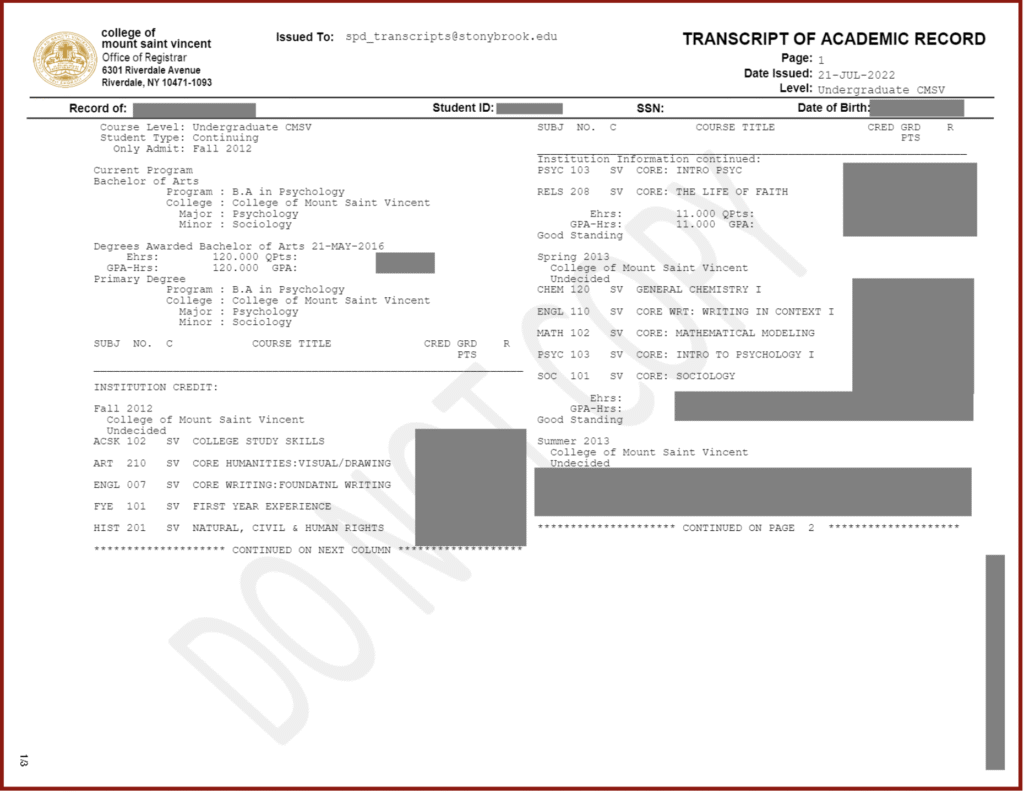
First, ask your registrar for a transcript or diploma signed by a school official. Next, that official’s signature is notarized. Some schools have a notary on campus, and if yours doesn’t, a mobile notary can meet the registrar at the school. Last, the Secretary of State in the state where it was notarized adds the apostille. For a California school, that’s the California Secretary of State.
Notarizing a photocopy instead is getting rejected more often, especially for Spain. Our post on the Spain diploma warning explains why.
Apostille or Legalization?
Most countries take an apostille, including China (since November 2023) and Canada (since January 2024). Some older guides still list both as needing legalization. Countries outside the Apostille Convention, like the United Arab Emirates, need legalization instead, which ends at the country’s embassy or consulate. The Hague Conference’s status table is the official list of member countries.
When You Also Need an FBI Background Check
Your school records are often only half the file. Many student visas also ask for an apostilled FBI background check, and if you’re going abroad to teach, see FBI Background Check for Teaching Abroad.
Keep in mind that these are two different apostilles. Your transcript is a state document, so the Secretary of State apostilles it. The FBI check is a federal document, so its apostille comes from the U.S. Department of State: a different office, a different process and a longer wait. That office takes no submissions or pickups on Fridays.
That’s why the FBI check is the one to start first. Our step-by-step guide walks through it.
Translation
If your records are going to a country where English isn’t the official language, you’ll often need a translation done after the apostille, so it covers the apostille too. We provide certified translations, and sworn translations for Spain.
How We Handle It
We notarize, take care of the apostille, run your FBI check if you need one, and translate. If you’ve already left, we can mail the finished documents to you abroad. Call or text (310) 526-0200.
Common Questions
Can I apostille my sealed transcript as it is?
In most cases, no. The apostille confirms a signature, so the transcript needs a school official’s signature, notarized. Ask your registrar how they handle it.
Does China still need embassy legalization?
No. Since 7 November 2023, China accepts apostilles on U.S. documents.
Does Canada?
No. Canada joined the Apostille Convention on 11 January 2024.
Is the apostille on my transcript the same as the one on my FBI check?
No. Your transcript gets a state apostille from the Secretary of State. The FBI check gets a federal apostille from the U.S. Department of State.
Do I need a translation?
Often, yes, if the official language isn’t English. We provide it.